The Solution
Vidhance Drone Vision for FPV
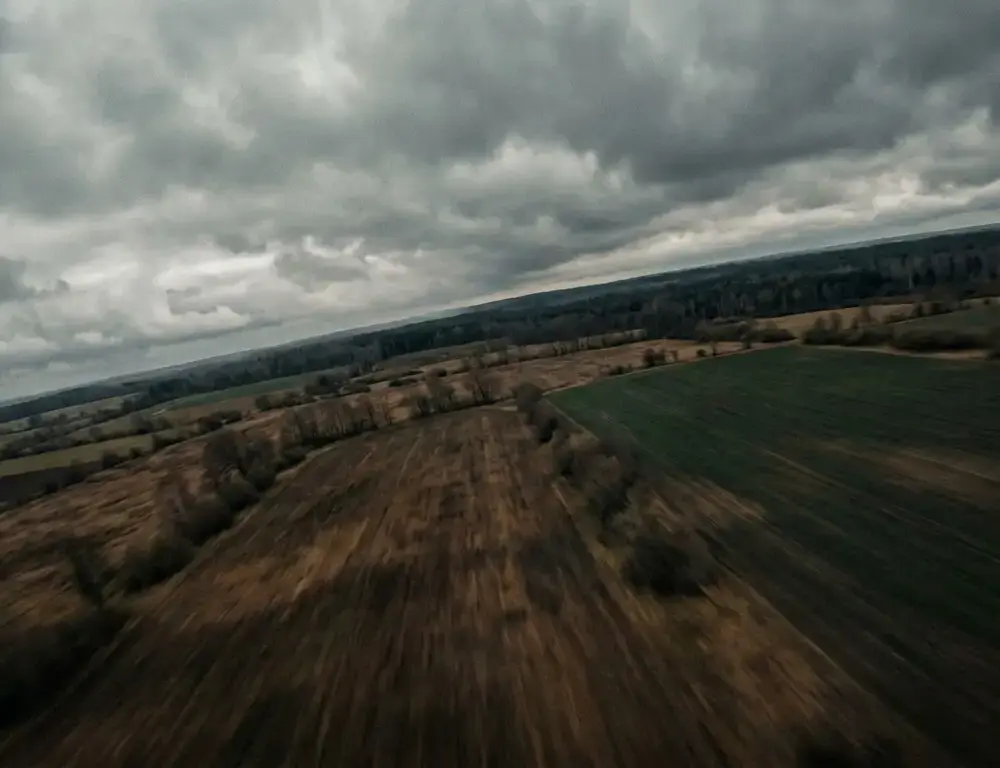
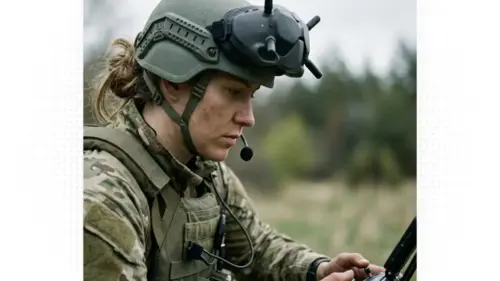
The FPV pilot flies, navigates and observes simultaneously. A jittery, degraded feed consumes cognitive bandwidth that should be spent on the mission. Conventional stabilization – software or mechanical – can suppress flight-critical motion cues, add latency, or introduce mechanical components that add weight and failure points.
Vidhance Drone Vision for FPV processes the feed in real time, at subframe latency, on standard edge hardware. It runs entirely on the platform, without cloud, connectivity or mechanical components. Each pilot can set their own level of correction, balancing image stability against the motion cues they need to feel the platform. Aided Approach locks onto the target and holds it through final engagement, so the pilot can focus on flying.
Roll and Pitch Compensation
Pilot-controlled correction for flight dynamics
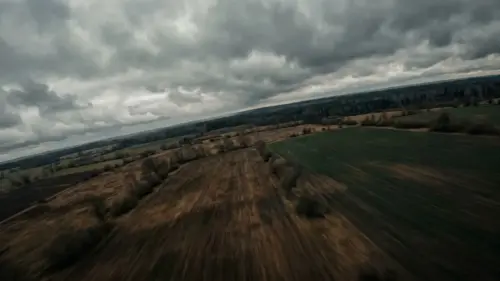
Roll and Pitch Compensation keeps the horizon level and stable through banked turns and aggressive manoeuvres. Each pilot can set their own level – enough correction to reduce fatigue, not so much that it removes the motion cues needed to sense how the drone is behaving.
EIS and Rolling Shutter Compensation
Stable feed, full focus on the mission
Electronic Image Stabilization (EIS) and Rolling Shutter Compensation remove jitter, vibration and frame distortion, running continuously in the background so the pilot gets a clean feed. Stabilization level is adjustable.
Aided Approach
Target lock through final approach
Vidhance Aided Approach locks onto the designated target – fixed or moving – and holds it steady within the field of view. The stabilization is calibrated to keep the target anchored while preserving the pilot’s sense of platform movement: firm enough to keep the target anchored, light enough that the pilot retains a clear sense of the drone’s own movement and direction. The crosshair guides the approach rather than just indicating position
Benefits
Operator Benefits
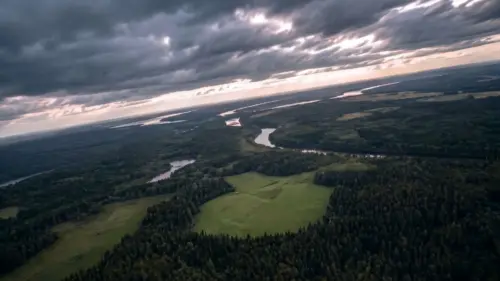
- Reduces cognitive load and motion sickness without removing flight-critical cues, so the operator stays focused on the mission
- Higher first-hit probability: stable video and aided approach combine to reduce operator error in the final seconds of engagement
- Zero frame latency: no buffering and minimal delay between capture and display
System Benefits
- Lower hardware cost and reduced dependency on mechanical components
- Extended flight time through reduced weight and power draw
- Less downtime from mechanical failure
Deployment
No hardware lock-in
Runs on COTS hardware, including Raspberry Pi, Qualcomm® and NVIDIA®. No proprietary processing unit, server or cloud dependency. Sensors can be swapped and recalibrated within hours without additional hardware or software upgrades.
Designed for the field
All processing runs on the platform, without network connectivity, in GPS-degraded and communications-denied environments. Algorithms operate close to hardware, optimized for power-constrained systems – the same foundation that runs in flagship smartphones at billion-device scale.
Sub-frame latency
Processing latency is under half the interval between two frames. At 30 fps: under 16 ms end-to-end, measured on a Raspberry Pi 4 running two concurrent 4K streams.
Integrate Drone Vision into your FPV platform
Tell us about your platform and we will show you what Vidhance Drone Vision can do.