The Solution
Vidhance Drone Vision for ISR
A mechanical gimbal covers one direction at a time. Overview or zoom on a contact – not both. And no operator can actively watch every feed under mission load. Contacts are missed at the gap between what the sensor sees and what the operator catches.
Vidhance Drone Vision for ISR extends field of view through software-controlled multi-camera stitching, shortens the path from observation to decision through automated detection and tracking, and transfers target identity across platforms without re-acquisition – at the edge, without a mechanical gimbal.
No proprietary processing unit, server or cloud dependency. Fully operational in GPS-degraded and communications-denied environments.
Virtual Gimbal and Multi-Camera Stitching
Wide-area coverage and precision detail
Without moving parts or SWaP penalty.
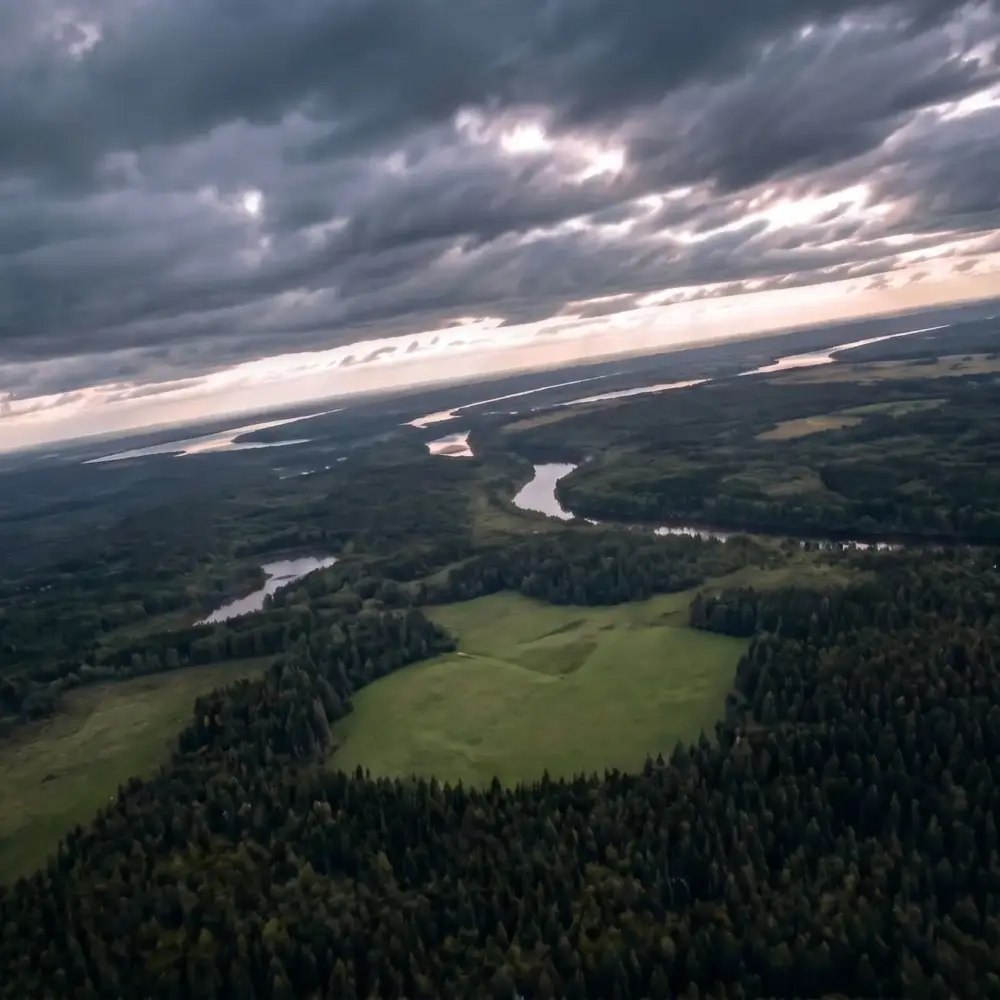
Virtual Gimbal – Software that replaces the mechanical gimbal. It creates a stable, high-resolution wide field of view – from a single wide-angle camera or multiple cameras stitched and overlaid together. Within that view, a movable and zoomable window gives the operator directed precision detail, while machine vision monitors the full area continuously.
Multi-Camera Stitching – EO and IR feeds from multiple fixed cameras merged into a single stabilized compound view in real time. Configurations include wide-angle stitching for extended field of view and 360° spherical stitching for full situational awareness. When a target crosses a camera boundary, tracking continues without operator input.
Multi-Camera Object Tracking
Cross-Platform Target Acquisition
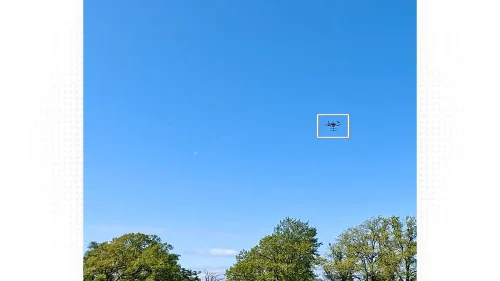
An object identified by the ISR drone is recognized by Vidhance AI across different viewpoints and camera angles – and acquired by another platform without manual re-acquisition. The FPV pilot or ground operator gets the target.
Automated tracking of moving objects and fixed landmarks
Object and Landmark Tracking
Software maintains track without manual input through platform movement and target evasion, across the full compound view.
- Moving Object Tracking: Detects and locks onto any moving object using image coordinates. Holds tracking through maneuver, partial occlusion and changing lighting. Operator-initiated.
- Landmark Tracking: Locks onto a fixed point using world coordinates, maintaining that reference independent of platform movement or altitude. Persistent area observation without manual adjustment.
Anomaly Detection
Muzzle flash, artillery detonation, flare signatures
Automatic identification of short-duration visual events: muzzle flash, artillery detonation, flare signatures. Anomaly Detection alerts the operator to contacts without active manual monitoring, reducing operator workload and accelerating decision-making.
Full-resolution still images without video interruption
Instant Hi-Resolution Capture
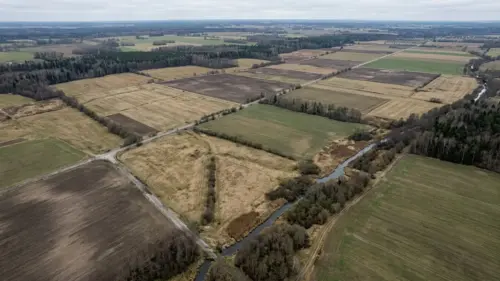
Captures a full-resolution still image from the live feed at any point during the mission. No interruption to the video stream.
Benefits
Operator Benefits
- Wide-area surveillance with precision zoom: covers the broadest possible field of view while isolating objects of interest at full resolution
- From video to actionable intelligence: Reduces time from observation to decision
- Shared situational awareness: distributed across operators and command nodes
- Multi-platform integration: target identity transfers across platforms without re-acquisition
System Benefits
- Lower hardware cost and reduced dependency on mechanical components
- Less downtime from mechanical failure’
- Extended mission window: less weight, more conditions covered through IR/EO fusion
Deployment

No hardware lock-in
Runs on COTS hardware, including Raspberry Pi, Qualcomm® and NVIDIA®. No proprietary processing unit, server or cloud dependency. Sensors can be swapped and recalibrated within hours without additional hardware or software upgrades.
Designed for the field
All processing runs on the platform, without network connectivity, in GPS-degraded and communications-denied environments. Algorithms operate close to hardware, optimized for power-constrained systems – the same foundation that runs in flagship smartphones at billion-device scale.
Sub-frame latency
Processing latency is under half the interval between two frames. At 30 fps: under 16 ms end-to-end, measured on a Raspberry Pi 4 running two concurrent 4K streams.
Integrate Drone Vision into your ISR platform
Tell us about your platform and we will show you what Vidhance Drone Vision can do.