Why Drone Vision
From raw video to actionable intelligence
Vidhance Drone Vision is one unified software layer for video processing across air, land and sea platforms. Operators get stable, actionable imagery in real time. Runs on-platform — close-to-hardware algorithms, minimal power draw, no cloud dependency. Built on algorithms proven in over one billion deployed devices. Available as SDK or integrated solution.
-
Designed for the field — Fully operational in GPS-degraded and communications-denied environments.
- No hardware lock-in — Runs on standard COTS hardware including Raspberry Pi, Qualcomm® and NVIDIA®. Sensors swap and recalibrate within hours — no hardware or software upgrades required.
- Sub-frame latency — Under 16 ms end-to-end at 30 fps, measured on a Raspberry Pi 4 running two concurrent 4K streams.
Core Technology
Vidhance Virtual Gimbal
A mechanical gimbal adds size, weight and power (SWaP), reducing flight time and payload capacity, with mechanical parts that can fail in the field.
Virtual Gimbal replaces the mechanical assembly in software. Fixed cameras are stitched into one compound scene — readable continuously by machine vision. The human operator gets a stabilised, zoomable window steerable anywhere within the full monitored area, including 360° spherical coverage. No moving parts. No SWaP penalty. No mechanical failure points.
Core Capabilities

Roll and Pitch Compensation
Keeps the horizon stable through rapid movements. Adjustable stabilization levels — reduces fatigue without removing platform motion cues.

Removes jitter, vibration, jello and skew continuously in the background. Adjustable stabilization level.

An object identified by one platform is recognized and acquired by another platform, without manual re-acquisition.

Maintains track through platform movement and target evasion — moving objects or fixed points, independent of altitude.

Detects muzzle flash, artillery detonation and flare signatures. Automated operator alerts without manual monitoring.

Instant Hi-Resolution Capture
Captures a full-resolution still image from the live feed at any point during the mission. Without interruption to the video stream.

Locks onto a designated target and holds it through final approach. The crosshair guides, not just indicates.
Platforms
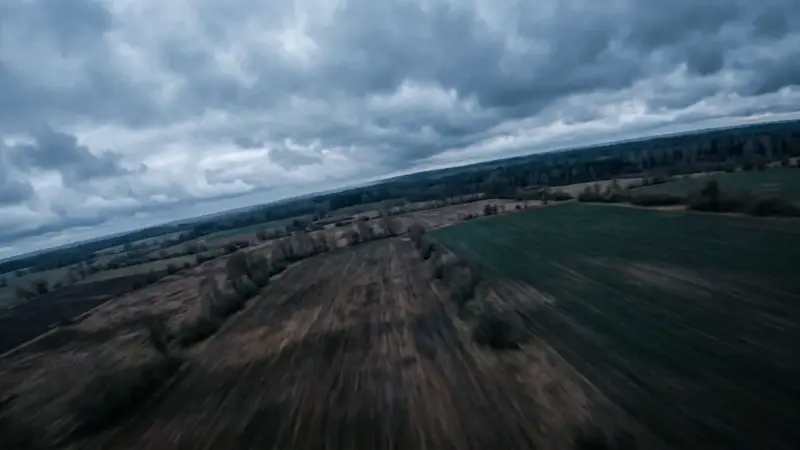
Air
Wide-area coverage and pilot-controlled stabilization — without a mechanical gimbal.
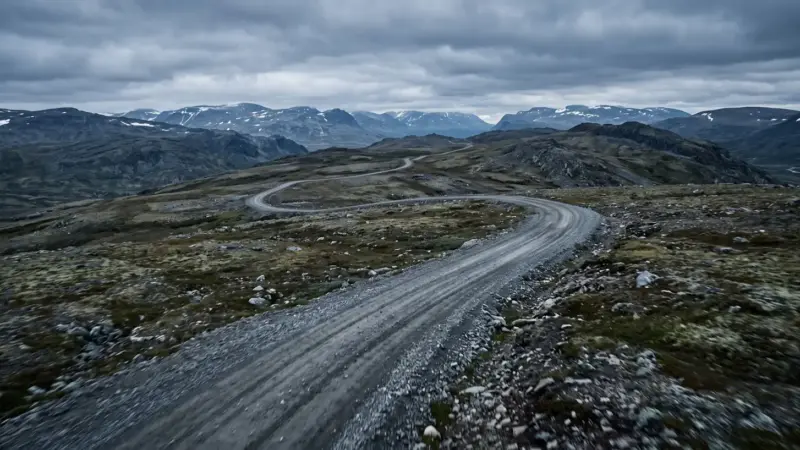
Land
360° situational awareness, threat detection and cross-platform object tracking

Why Vidhance
Proven at scale
The algorithmic core that runs on over a billion consumer devices powers Drone Vision. Tested and refined across millions of real-world deployments.
Innovation speed
Our development culture is shaped by the mobile industry – rapid iteration, hardware-agnostic software, continuous deployment. We bring that innovation pace to mission-critical platforms. Software and hardware update independently, so new capabilities reach the field without waiting for a hardware cycle.
European provider
Based in Sweden, within EU and NATO-aligned frameworks. IP, supply chain and engineering in Europe. Engineering support from the team that built it.
Learn more
We work with drone manufacturers, system integrators and defence procurement teams. Tell us about your platform and we will show you what Vidhance Drone Vision can do.